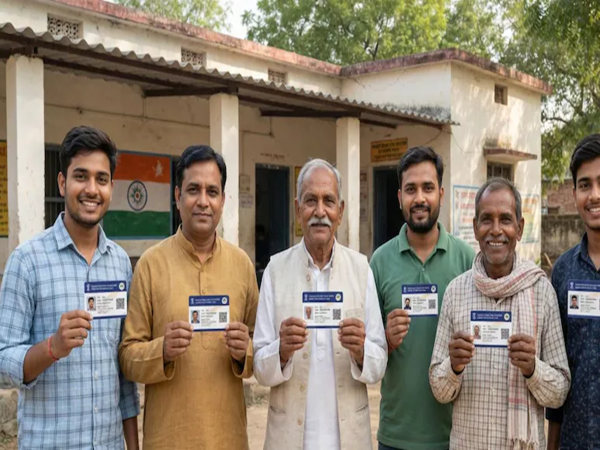
When patients switch hospitals during the course of their treatment, they often have to recollect old medical reports, test results, and documents related to their care. In many cases, because these records are unavailable, tests have to be repeated. The ABHA ID—created under the central government’s Ayushman Bharat Digital Mission (ABDM)—can help alleviate this challenge. It allows patients to link their digital health records from various hospitals and laboratories. With the patient's consent, doctors at a different hospital can also access these records, reducing the need to repeatedly undergo tests or gather past documentation.
What is an ABHA ID?
ABHA, which stands for 'Ayushman Bharat Health Account,' is a unique 14-digit digital health ID. Its purpose is to connect a patient's medical records across the digital systems of various healthcare institutions. Through it, patients can view their test reports, doctor prescriptions, treatment details, and other digital medical records in one place, and share them as needed. However, simply creating an ABHA ID does not automatically populate it with a patient's entire medical history; records generated digitally by hospitals, laboratories, or other healthcare institutions must be linked to the ABHA ID.
How it reaches a new doctor when changing hospitals
Suppose a patient receives treatment at one hospital and later moves to another. If both hospitals are part of the Ayushman Bharat Digital Mission network and the patient's previous medical records are available digitally, then—with the patient's consent—doctors at the new hospital can access those records. This reduces the need for patients to carry their old test reports and full treatment details every time they visit a new facility. Furthermore, having access to information about previous treatments and tests helps doctors determine the best course for ongoing care.
How to create an ABHA ID
The process of creating an ABHA ID is free of charge. It can be done online from the comfort of your home, or by visiting any healthcare institution that is part of the ABDM network.
How to Create an ABHA ID Online
First, visit the official website at https://abha.abdm.gov.in. Select the "Create ABHA Number" option and choose either your Aadhaar card or another valid KYC document. If registering via Aadhaar, enter your 12-digit Aadhaar number and verify it using the OTP sent to your registered mobile number. Next, provide the requested information and verify your mobile number. You can also create an "ABHA Address," which functions like an email address for your digital identity. Once the process is complete, a 14-digit ABHA number will be generated, which you can then download. Registration can also be done through the ABHA app or other ABDM-enabled Personal Health Record (PHR) apps.
What to Do If Your Mobile Number Is Not Linked to Aadhaar or You Do Not Have a Smartphone
If your mobile number is not linked to your Aadhaar, or if you do not own a smartphone, you can seek assistance at the nearest ABDM-registered healthcare facility. There, your identity can be verified through biometric or face authentication to create an ABHA ID. Please contact the hospital's help desk for this purpose.
How to Link Medical Records to Your ABHA ID
Adding New Records from Hospitals or Labs
Whenever you visit an ABDM-enabled hospital, clinic, or lab, provide your 14-digit ABHA number or ABHA address during registration. You can also register by scanning the ABHA-based QR code available at the hospital counter using an appropriate app. Once the hospital or lab generates digital reports, prescriptions, or other medical records, these can be linked to your ABHA ID. You can access these records through your ABHA app or any other PHR app by using the "link and view records" feature. You may be required to provide consent where necessary.
How to Keep Old Records Safe
If a patient has files, X-rays, or test reports from previous treatments, they can scan them and store digital copies as PDFs or images. Some personal health record apps also offer features to upload and securely store such documents. However, please note that uploading physical reports to a health locker within an app does not automatically make them part of the medical records available on the ABDM network. The process for sharing records digitally from a hospital is different.
How to Provide Consent for a Doctor to View Records
A patient’s medical information cannot be shared with another hospital or doctor without their consent. Therefore, when a new hospital requests to view old records, the patient should review the consent request. Check which hospital or doctor the records are being shared with, what specific medical information is being requested, and for what purpose. Also, verify the duration for which the records will be shared. If the details are correct, you may provide your consent.
How to Withdraw Your Consent
Patients can also withdraw consent that was previously granted. According to the privacy policy of the official ABHA app, you can go to the 'My Consent' section, select the previously granted consent, and use the 'Revoke' option to withdraw it.
How to find hospitals and labs in your city
Patients can access information about registered healthcare facilities by visiting the official Health Facility Registry website of the Ayushman Bharat Digital Mission (ABDM) at https://facility.abdm.gov.in. This includes various healthcare institutions such as hospitals, clinics, and diagnostic centers. Before visiting a hospital, it is advisable to check whether they offer facilities for linking and sharing digital health records.
What if you do not have a smartphone?
Having a smartphone is not mandatory for using an ABHA ID or digital health records. Patients can complete the identification and consent process with the assistance provided at the hospital. However, for records to be viewed and shared, the hospital must be connected to an ABDM-enabled system.
Is this facility available in private hospitals?
Along with government hospitals, private hospitals, clinics, diagnostic centers, and other healthcare institutions can also join the Ayushman Bharat Digital Mission. However, this facility is not automatically available at every hospital; the institution must be registered within the ABDM network and equipped to share digital health records. In this way, an ABHA ID makes it easier to access a patient's medical records even when they switch hospitals. A key advantage is that, with the patient's consent, information regarding previous treatments and diagnostic tests can be made available to a new doctor.
Disclaimer: This content has been sourced and edited from NDTV India. While we have made modifications for clarity and presentation, the original content belongs to its respective authors and website. We do not claim ownership of the content.
Contact to : xlf550402@gmail.com
Copyright © boyuanhulian 2020 - 2023. All Right Reserved.