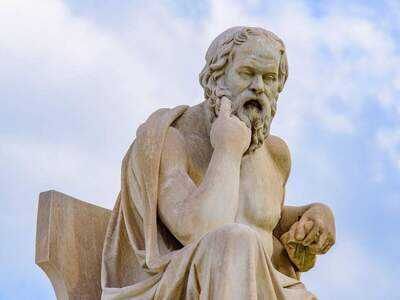
People in general speak about topics like honesty, respect and claim to always stand by their principles but it is their actions that often tell a different story. A quote from ancient Greek philosopher SoPeople in general speak about topics like honesty, respect and claim to always stand by their principles but it is their actions that often tell a different story. A quote from ancient Greek philosopher Socrates addresses this gap between public image and private life: “The greatest way to live with honour in this world is to be what we pretend to be.”
Quote of the day: What does it mean?
The quote of the day teaches that if someone wants to be known as an honest or courageous person then they should first practise these qualities instead of just saying you have them. Our reputation play quite a big part in influencing how others see us, but it cannot replace the everyday choices that reveal our true character.
The quote also raises a question about self-awareness because people can often also become so concerned with maintaining a particular image that they stop seeing the difference between what they say and how they actually behave. Socrates with this quote advices to understand that difference.
Although the saying has been attributed to Socrates, the wording of it is a paraphrase rather than a verbatim quote from any ancient text because Socrates did not write down his own philosophical teachings. Its is closely related to the themes that are discussed in Xenophon's Memorabilia, particularly Book II, Chapter 6.
Who was Socrates? His philosophy and surviving works
Born in Athens around 470 BC, today Socrates has became one of the most influential people that belong ancient Greek philosophy. He wrote no known books or philosophical texts of his own. Hence, his ideas and life are primarily known through the works of his student Plato and the historian Xenophon, who both have mentioned him in their writings.
Plato's Apology tells us about Socrates' defence at his trial, while Crito examines his decision to remain in prison rather than to escape his sentence. In Phaedo, Plato describes his final hours. Other works such as Meno and Euthyphro deal with questions of virtue and the nature of piety.
Xenophon's work in Memorabilia offers another story of Socrates that reveals his views on what is correct moral conduct.
As a philosopher Socrates was famous for asking questions to people about things like justice, knowledge, and virtue. This approach, later named the , tested beliefs through questions and revealed contradictions buried in people’s arguments.
In Athens he was convicted in 399 BC of impiety and corrupting the youth and was sentenced to death by poisoning.
( Originally published on Oct 20, 2026 )
Contact to : xlf550402@gmail.com
Copyright © boyuanhulian 2020 - 2023. All Right Reserved.