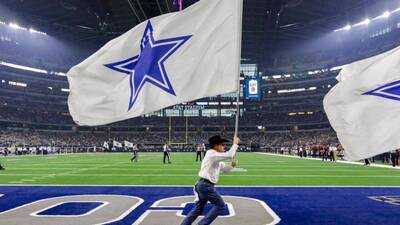
The Dallas Cowboys are worth $15.5 billion in Sportico's 2026 valuations, up 21% from 2025. That keeps them as the highest-priced club in the world since Sportico began its rankings in 2020. They are also the first pro team to pass $15 billion. The odd part is the football. Dallas has not won a Super Bowl in 30 years. So what is the number really measuring? Most of the answer sits in stadium suites, sponsor deals, jersey racks and a real estate project in Frisco.
How much of the Cowboys ' $15.5 billion comes from outside football?Nobody outside the club can give you a clean split, and Sportico does not publish one. What it does say is telling. The valuations include real estate and related businesses, such as the sports components of The Star, the Cowboys' mixed-use development in Frisco. So the price tag covers more than a team. It covers the machine built around the team.
The broad shape is easy to see, though. National TV money is shared across the league, and it lifts everyone. Even the Cincinnati Bengals, who rank 32nd at $7.4 billion, are worth more than all but six non-NFL teams. Dallas pulls away with income that stays at home: stadium sponsors, premium seating, merchandise, tours and events. That is where the gap gets built.
The cash numbers that set Dallas apartDallas brings in $1.3 billion in revenue, and only Real Madrid reports more among sports franchises. Its estimated EBITDA of $510 million is twice the Rams' total and nearly four times the league average of $139 million.
The multiple may say even more. The Cowboys are valued at about 30 times EBITDA, while the rest of the NFL averages 72. Think of it this way. Most owners are valued on scarcity, because only 32 teams exist and buyers pay to get in. Dallas is valued closer to a business that earns its keep. One sports team investor told Sportico a stake in the Cowboys would be good value at $18 billion to $20 billion.
Jerry Jones found the money the league does not shareJones bought the Cowboys and their stadium in 1989 for $150 million, including unfunded liabilities. The team went 1-15 in his first season. Cash was tight, and he went looking for it in places his fellow owners had left alone.
Before 1995 the league controlled almost all sponsor inventory. Jones challenged that, the league sued, he countersued, and a year later both sides dropped the cases. The Cowboys kept their deals. Stadium sponsorship money is not split with the other 31 owners. CNBC reported the Cowboys could reach $250 million in sponsorship revenue in 2024, at least $50 million more than any other team.
Merchandise followed the same path. In 2002 the Cowboys opted out of the league's shared merchandise system. They still pay their allotted share into the pool, but their merchandise business has outgrown the league's and likely approached $200 million in a recent year. Run the math on the whole journey. The team is now worth more than 100 times what Jones paid.
Why the stadium and The Star matter more than the scoreboardThe city of Arlington owns AT&T Stadium, but Jones holds the operating rights and collects the revenue from events. It opened in 2009 as the NFL's first billion-dollar venue. The building is busy long after the season ends.
Here is a small detail that makes the point. About 1,500 fans a day pay at least $40 for a guided stadium tour, which brings in nearly $10 million a year. Nobody buys that ticket because of the offense. They are paying for the star on the helmet. Jones is also spending $300 million on upgrades ahead of the 2026 World Cup.
Then there is Frisco. The Star is a 91-acre, $1.5 billion headquarters and practice facility that opened in 2016. It grew the team's real estate holdings and added branding and sponsorship chances. A practice field that doubles as a retail and events address is the kind of idea that separates Dallas from clubs that simply rent out a stadium.
Is the football still doing any work?Yes, though maybe not the work people expect. The 1990s teams led by Troy Aikman, Emmitt Smith and Michael Irvin won three Super Bowls in four seasons starting in 1992. That run built a fan base that never really left. One local expert credits Thanksgiving games and decades of Jones keeping the team in the news as well. He also notes the "America's Team" label did not come from the club itself.
Even now, with back-to-back missed playoffs and no conference title since 1995, the brand holds. My read is that football has become the advertisement rather than the product. The wins of the 1990s were a deposit, and the business has been collecting interest ever since. Nothing in the numbers says that interest runs out soon. It also does not say it lasts forever.
What could test the Cowboys' premiumThe league around Dallas is moving fast. The average NFL team is now worth $9.34 billion, up 31%, the biggest one-year jump since Sportico started its valuations in 2020. Compare that with Dallas at 21%, and you notice something quiet. In percentage terms, the Cowboys grew slower than the field.
The dollar gap is still wide. The Rams sit second at $12.7 billion, followed by the Giants at $12 billion. A year ago Sportico had Dallas at $12.8 billion and the Rams at $10.43 billion, so the lead has grown from roughly $2.4 billion to about $2.8 billion. But rivals are catching up faster than the Cowboys are pulling away, and a premium built on scarcity is easier to copy than one built on cash flow. Dallas has the cash flow. What remains unproven is how well suites, sponsors and souvenir buyers hold up if the losing continues.
Jones said in 2018 he would not sell for less than $10 billion. Nobody expects a sale. But if one ever came, an investor has already named a range between $18 billion and $20 billion.
Contact to : xlf550402@gmail.com
Copyright © boyuanhulian 2020 - 2023. All Right Reserved.