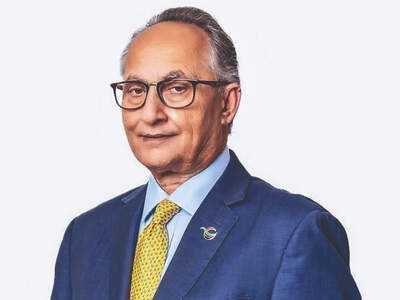
New Delhi: Dubai-based logistics firm is sharpening its focus on India and plans to pursue fresh opportunities in the country's port sector while expanding , said its group CEO , as disruptions in West Asia prompt global businesses to reassess their supply chains and diversify trade routes.
"India is very important in our plans. We are bidding for everything that is on offer," Narayan told ET, adding that DP World is expanding capacity at Tuna Tekra, seeking renewal of its concessions in Mumbai and Mundra, and plans to bid actively for the . Disruptions around the Strait of Hormuz and Bab el-Mandeb have sharply increased supply-chain costs on the East-West trade route, he said. "Something that used to cost $1,000 will now cost $10,000. This will have an inflationary impact and, at some point, will begin creating shortages," Narayan said.
Also Read:
DP World had expected the in Dubai to generate $1-1.2 billion in 2026, he said, but with the port operating at roughly 10% of its capacity, the company does not expect any earnings from it this year. However, Jebel Ali accounts for only about 15% of DP World's profitability, while the rest of the business remains intact and has grown 15%. The net annual impact on the company is, therefore, expected to remain below 10%, Narayan said.
The disruptions have also altered capacity planning across the logistics sector. In a normal operating environment, companies could manage with 30-35% less capacity, he said. A business requiring one million twenty-foot equivalent units (TEUs) would now need capacity for 1.3 million TEUs, increasing investment per unit by about 30%. Input costs for creating the additional capacity have also risen by about 20%.
Also Read:
For India, the most significant direct impact is likely to come from higher . Its large domestic economy, however, provides some insulation against global trade disruptions, Narayan said. He noted that India could help address some of the connectivity requirements into Africa if Jebel Ali remains constrained.
India could serve markets on one side of the Red Sea and Strait of Hormuz chokepoints, while Egypt, where the company already has facilities, could serve the other, Narayan said.
Businesses are also moving away from and retaining larger inventories as they prioritise resilience over the lowest possible cost. "You keep a three-month buffer, and there is no longer any such thing as zero-cost money," he said.
Contact to : xlf550402@gmail.com
Copyright © boyuanhulian 2020 - 2023. All Right Reserved.