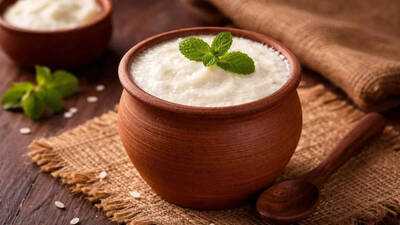
Curd turning sour too quickly in summer? Try these simple kitchen tips to keep it fresh longer
Curd is one of those foods that quietly sits in almost every Indian refrigerator. It goes with rice, parathas, and even simple summer lunches when the heat makes heavy food difficult to eat. But once the temperature rises, a familiar problem starts appearing in many kitchens. The curd that tasted mild and creamy at night suddenly turns quite sour the next day.
During the hot summer months, food tends to spoil faster because heat speeds up natural chemical and bacterial processes. This is especially true for fermented foods like curd, which continue changing even after they are prepared.
In many Indian homes, curd is not just a side dish but a daily staple that completes a meal. Because it is prepared and stored regularly, even small temperature fluctuations can quickly affect its taste and freshness.
This is because curd is not exactly a “finished” food item. It is still alive with beneficial bacteria. The beneficial bacteria continue to work after they have made the curd. They work slowly to make more acid over time. When it is hot outside, they work faster. This is why the curd can turn sour quickly during summer.
Curd is prepared through a natural fermentation process, which means its taste and texture can continue to change even after it has set. Factors such as temperature, storage conditions, and handling can all influence how quickly it becomes sour.
The good news is that there are a few things we can do at home to slow this process down. We can keep our curd tasting fresh for longer.
Why does curd become sour faster in summer
Temperature plays a crucial role in the rate at which curd ferments. Warmer conditions accelerate bacterial activity, which is why curd tends to develop a sharper taste much faster during the summer months compared to cooler seasons.
The process of creating curd occurs when bacteria react with the sugar present in milk, which results in the production of lactic acid. This natural fermentation process makes the milk thick and imparts the characteristic tangy flavour to the curd.
However, the fermentation process does not stop with the thickening of the milk. The bacteria will continue to produce acid gradually. This will result in the development of the characteristic flavour, which will be sharper than before.
The process of fermentation occurs faster if the mixture is heated. This is because the ideal temperature for the survival of these bacteria occurs during the summer. This means that the curd prepared during the evening will be more sour the next morning.
Refrigeration helps slow the process
The easiest way to control sourness is to keep the curd cool after it sets. Lower temperatures slow down bacterial activity and reduce further fermentation.
This is why timing matters. Curd should be moved to the refrigerator soon after it sets, rather than being left out for long periods, especially during hot summer days.
According to the milk and milk products should be stored under hygienic conditions and kept properly refrigerated to maintain quality and prevent spoilage.
Where you place the curd inside the refrigerator can also matter. The middle shelf usually stays cooler and more stable than the door section, which warms up every time the fridge is opened.
Another small habit helps as well: avoid taking the curd out repeatedly. Every time it warms up and cools again, fermentation can speed up.
The container you use can make a difference
Many people store curd in the same bowl it was set in, often stainless steel or plastic. While that works, some kitchen experts suggest using glass containers instead.
Glass does not react with food, and it holds cold temperatures well. It also helps preserve the natural taste of curd.
Just as important is keeping the container tightly closed. An open container allows air to enter and can expose the curd to other odours in the refrigerator.
Always keep curd covered
Leaving curd uncovered in the fridge is surprisingly common. But it can affect the taste more than people realise.
Curd absorbs surrounding smells easily. If the container is left open near strong-smelling foods, its flavour may change. It may also lose moisture slowly, which can affect the texture.
A simple lid or an airtight cover keeps the environment inside the container stable and protects the curd from outside air.
A traditional trick used in many kitchens
Except for the use of refrigeration, there are other tricks that individuals use at home. One of these tricks is to place a small portion of dried coconut inside the container holding the curd. It is widely believed that it slows down the souring of the curd and makes it taste milder.
There is not much research on this practice, but it is a common trick used by many individuals at home, especially during the summer.
What to do if the curd already tastes too sour
In some cases, curd may also turn slightly sour even after proper storage. In such cases, the taste can be adjusted.
To do so, some chilled boiled milk can be added to the curd. This will reduce the sharpness of the taste.
Fresh milk will reduce the sourness and make the taste milder again.
This does not stop the fermentation process, but the taste will be more pleasant.
Small habits can keep curd fresher for longerThis is because the curd, being a living food, changes its taste over time. Also, the change occurs more quickly during the summer season than during the winter season.
However, if one follows certain simple procedures, the change occurs much more slowly.
With the right care, one can enjoy the curd even during the peak of the summer season.
During the hot summer months, food tends to spoil faster because heat speeds up natural chemical and bacterial processes. This is especially true for fermented foods like curd, which continue changing even after they are prepared.
In many Indian homes, curd is not just a side dish but a daily staple that completes a meal. Because it is prepared and stored regularly, even small temperature fluctuations can quickly affect its taste and freshness.
This is because curd is not exactly a “finished” food item. It is still alive with beneficial bacteria. The beneficial bacteria continue to work after they have made the curd. They work slowly to make more acid over time. When it is hot outside, they work faster. This is why the curd can turn sour quickly during summer.
Curd is prepared through a natural fermentation process, which means its taste and texture can continue to change even after it has set. Factors such as temperature, storage conditions, and handling can all influence how quickly it becomes sour.
The good news is that there are a few things we can do at home to slow this process down. We can keep our curd tasting fresh for longer.
Why does curd become sour faster in summer
Temperature plays a crucial role in the rate at which curd ferments. Warmer conditions accelerate bacterial activity, which is why curd tends to develop a sharper taste much faster during the summer months compared to cooler seasons.
The process of creating curd occurs when bacteria react with the sugar present in milk, which results in the production of lactic acid. This natural fermentation process makes the milk thick and imparts the characteristic tangy flavour to the curd.
However, the fermentation process does not stop with the thickening of the milk. The bacteria will continue to produce acid gradually. This will result in the development of the characteristic flavour, which will be sharper than before.
The process of fermentation occurs faster if the mixture is heated. This is because the ideal temperature for the survival of these bacteria occurs during the summer. This means that the curd prepared during the evening will be more sour the next morning.
Refrigeration helps slow the process
The easiest way to control sourness is to keep the curd cool after it sets. Lower temperatures slow down bacterial activity and reduce further fermentation.
This is why timing matters. Curd should be moved to the refrigerator soon after it sets, rather than being left out for long periods, especially during hot summer days.
According to the milk and milk products should be stored under hygienic conditions and kept properly refrigerated to maintain quality and prevent spoilage.
Where you place the curd inside the refrigerator can also matter. The middle shelf usually stays cooler and more stable than the door section, which warms up every time the fridge is opened.
Another small habit helps as well: avoid taking the curd out repeatedly. Every time it warms up and cools again, fermentation can speed up.
The container you use can make a difference
Many people store curd in the same bowl it was set in, often stainless steel or plastic. While that works, some kitchen experts suggest using glass containers instead.
Glass does not react with food, and it holds cold temperatures well. It also helps preserve the natural taste of curd.
Just as important is keeping the container tightly closed. An open container allows air to enter and can expose the curd to other odours in the refrigerator.
Always keep curd covered
Leaving curd uncovered in the fridge is surprisingly common. But it can affect the taste more than people realise.
Curd absorbs surrounding smells easily. If the container is left open near strong-smelling foods, its flavour may change. It may also lose moisture slowly, which can affect the texture.
A simple lid or an airtight cover keeps the environment inside the container stable and protects the curd from outside air.
A traditional trick used in many kitchens
Except for the use of refrigeration, there are other tricks that individuals use at home. One of these tricks is to place a small portion of dried coconut inside the container holding the curd. It is widely believed that it slows down the souring of the curd and makes it taste milder.
There is not much research on this practice, but it is a common trick used by many individuals at home, especially during the summer.
What to do if the curd already tastes too sour
In some cases, curd may also turn slightly sour even after proper storage. In such cases, the taste can be adjusted.
To do so, some chilled boiled milk can be added to the curd. This will reduce the sharpness of the taste.
Fresh milk will reduce the sourness and make the taste milder again.
This does not stop the fermentation process, but the taste will be more pleasant.
Small habits can keep curd fresher for longerThis is because the curd, being a living food, changes its taste over time. Also, the change occurs more quickly during the summer season than during the winter season.
However, if one follows certain simple procedures, the change occurs much more slowly.
With the right care, one can enjoy the curd even during the peak of the summer season.
Contact to : xlf550402@gmail.com
Copyright © boyuanhulian 2020 - 2023. All Right Reserved.